We’re expecting our third baby next month. Until I experienced delivering my own children, I used to think that birth, the beginning of life, and death, the end of life, were opposites. However, as I fully embraced home birth to experience labor and delivery as naturally as possible—and to dig deeper into the meaning of death through my research—I realized that birth and death have much in common.
Both are transitions from one state to another: unpredictable, messy, exhausting, and ultimately sacred journeys. They are also topics we tend to hush—too gruesome to discuss openly, too intrusive for polite company. Yet, we all share a 100% guarantee: each of us faces both birth and death. Here are my reflections.
Unpredictability
Birth and death both unfold in their own time. You may experience signs that foreshadow the event, but their exact timing and manner are rarely within your control—unless you schedule a planned caesarean section or assisted dying.
Even with a birth plan, nature still keeps the final say. Our entry into and exit from existence are equally mysterious.
Messiness
The natural course of both birthing and dying is messy. These are raw, physiological states that may involve involuntary movements or unpredictable moods. Visitors may arrive with flowers and gifts, but in the end, flowers wither, dishes pile up, and someone must clean up.
Both experiences strip us down to our most primal selves—as we cross from one state to another.
Exhausting Preparation
Preparing for either birth or death can be profoundly tiring. Even simple chores—organizing a closet, writing a will—become burdensome when a major transition looms.
Both processes invite the same sorts of questions:
- Where will it happen?
- Who will be with me?
- What will I wear?
- Will music play, or silence reign?
- How much pain will I tolerate?
- How much medical intervention will I accept?
And if there’s time to wait, there are often long stretches of boredom before the inevitable event takes over.
A Journey with Choices
Both journeys involve choices—like planning a trip. Or, if you’ve been avoidant all along (which is your choice), it will come to surprise you anyway. You can choose to learn the local language, hire a guide, or check into an “all-inclusive resort.”
More people today rely on the “all-inclusive resort” option—the medical system—for birth and death, too. While modern medicine saves countless lives, its efficiency and profit motives sometimes override the natural rhythm of these sacred transitions. Hospital births are known to rush the birthing process, such as induction (e.g., pitocin), cutting the umbilical cord before blood from the placenta is fully transferred to the baby, and weighing the newborn before having sufficient physical contact with parents. Studies show that about 32% of all U.S. births are by C-section, many performed for convenience or scheduling rather than medical need (March of Dimes, 2024).
Just decades ago, most births and deaths occurred at home, surrounded by family and neighbors. That visibility made these experiences communal and familiar—part of everyday life, not events to be outsourced to institutions.
Korean Mama’s Take
I had a morbid curiosity about entering the so-called “curse of Eve” and experiencing it to the fullest without medical intervention. I also learned that home birth can offer significant advantages for low-risk mothers and babies: fewer interventions, lower infection rates, faster recovery, and higher satisfaction compared to hospital births (National Library of Medicine, 2009). I don’t like the sterile hospital environment with bright lights, professionals checking me and the baby several times at night, and poking us with needles. I don’t like to be told that I can’t eat my favorite snacks.
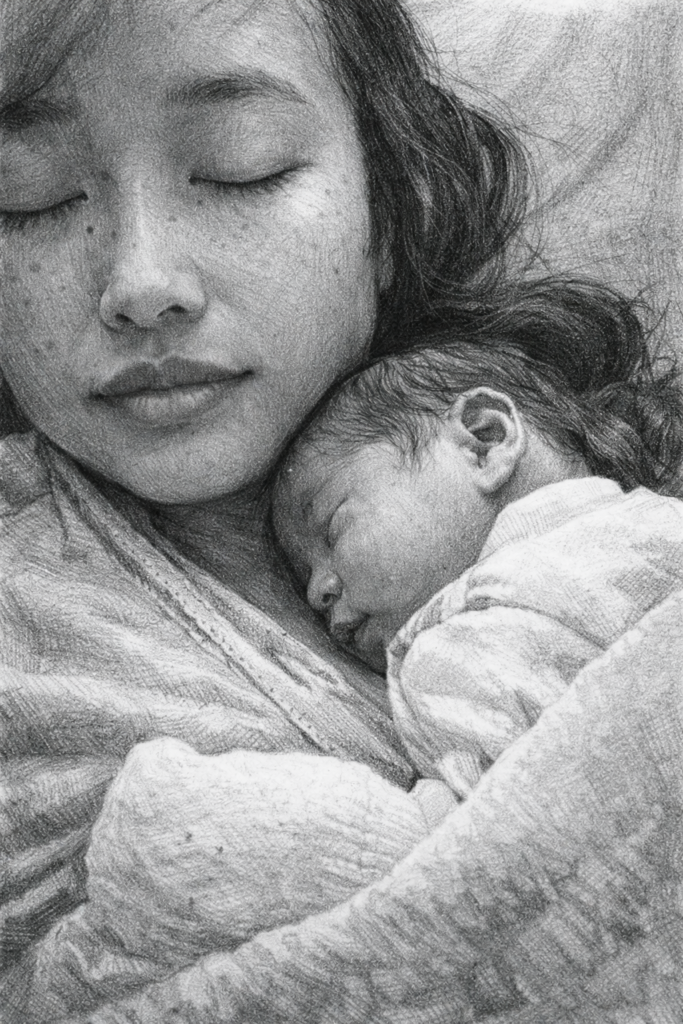
Therefore, I chose the path of home birth for my two boys—and I plan to deliver my baby daughter at home, too. My husband and I attended several weeks of Bradley Method classes, and we partnered with two skilled midwives to guide us through preparation, birth, and recovery. We’ve learned to speak the language of “birth,” for an unpredictable journey it takes us.
Our midwife, Martha Weaver—a nurse and believer—was a God-send.
Covered by Grace
Even this “curse” was covered by grace. Though the birthing process was physiologically taxing and animalistically brutal, it was also astonishingly beautiful.
God was the one who “created my babies’ innermost being and knitted them together in my womb” (Psalm 139:13). The contractions—about fifty times the intensity of my menstrual cramps—were bearable through deep breathing and praise:
“Let everything that has breath praise the Lord.” — Psalm 150:6
Pushing the baby’s head felt about ten times harder than completing a triathlon, yet moments of rest came between the intense exertion. When the head finally crowned, long, gentle breaths guided my baby out with minimal tearing.
My husband and midwife were my battlefield companions—they saw my barest, strongest and weakest moments, and bore with me through the groans of night and dawn. I will never forget the passage that Martha read to me after eight hours of labor through the night, as she gazed into the rising sun: “Weeping may tarry for the night, but joy comes with the morning.”– Psalm 30:5
Facing Death with the Same Faith
Even when the “curse of Eve” is upon me and my body withers like grass, God is not at a loss in handling my body, mind, and soul. My home births were bearable with His presence and the right support.
Death, too, is a result of our original sin. Though I do not know when my body will perish, I pray to face it with the same sacred curiosity—with trust that the God who created my inmost being and brought me through this life will also carry me through that next transition. I plan to die at home as much as possible, adjusting to my timing to transition into a new state while letting the medical interventions fade. I plan to let my loved ones see my bare, vulnerable, unpredictable moments, as much as they can face it with boldness, so that they won’t miss out on the important lessons that this once-in-the-lifetime transition offers. So that my loved ones will have the opportunity to become a little more familiar and comfortable with it—to better prepare for their own transitions one day.
“Listen, I tell you a mystery: We will not all sleep, but we will all be changed— in an instant, in the twinkling of an eye, at the last trumpet. For the trumpet will sound, the dead will be raised imperishable, and we will be changed.” —1 Corinthians 15:51-52
What are your experiences and expectations on these birth and death transitions? What confidence, fears, or questions do you have?